Hi there and nice to have you back! On this blog post we will be tackling the theory of gender performativity, it is described as “a certain kind of enactment; the “appearance” of gender is often mistaken as a sign of its internal or inherent truth; gender is prompted by obligatory norms to be one gender or the other (usually within a strictly binary frame), and the reproduction of gender is thus always a negotiation with power; and finally, there is no gender without this reproduction of norms that risks undoing or redoing the norm in unexpected ways” (Butler, 2009). In simpler terms, throughout one’s life, they repeat performances of gender that obey to gender norms, which has the function of marking gender performatives and depicting individuals as comprehensible. Thus, “gender is always a doing, though not a doing by a subject who might be said to pre-exist the deed” (Young, 2016). This theory was established by Judith Butler in 1990 after publishing her book, Gender Trouble. It opened the door for cultural configurations of sex and gender, and exposing the binarism of sex and it’s fundamental unnaturalness.
Watch Judith Butler’s video for a clearer understanding on gender performativity!
This theory is important for society as it can help others from being too quick to judge someone on appearance. If more people understood that gender is a construct that we were put in when we were born into the world there would hopefully be less homophobia. Since we were born we are told that only girls can play with dolls and only boys can like sports, we have been molded since the beginning to follow these gender norms but, has anybody wondered why we have to. People brave enough to question these norms and to act or dress how they want are persecuted for being different. Gender performativity allows individuals to finally understand that there is nothing wrong with them for liking the color blue instead of pink or vice versa. Hopefully, as more people learn about this theory they will be less likely to push gender norms on their kids or on other people and to let them grow into themselves organically.
How to end the cycle of gender performativity?
Do not judge anyone before you meet them and especially do not judge based on looks
Here is Kimberle Crenshaw explaining the importance of intersectionality and asking us to finally look at reality and speak up for victims of prejudice.
Hello and welcome again! This blog post is dedicated to the theory of intersectionality. The theory holds that “various forms of discrimination centered on race, gender, class, disability, sexuality, and other forms of identity, do not work independently but interact to produce particularized forms of social oppression” (“Intersectionality”, 2013). This theory basically declares that most people are frequently deprived by several sources of oppression such as: race, glass, gender, sexual orientation, religion etc. It identifies that overlapping identities (like “Hispanic” and “gay”) converge to make a complex oppression. The term was originally coined by law professor and social theorist, Kimberle Crenshaw. Though, the concept first emerged 2 decades earlier when black feminist spoke about how numerous black women were having difficulty identifying with issues of the mainstream white, middle-class nature of the feminist movement. Issues such as the stress to be a homemaker, were not concerns of black women as they did not have the comfort of being a homemaker as most often they had to work in order to keep their family alive and fed. Simultaneously, black women suffered sexism while partaking in the Civil Rights movement and were regularly kept away from positions of leadership. Thus, this intersectional encounter of racism in the feminist movement and sexism in the Civil Rights movement mobilized black women to command for a movement that focused on their lived experiences ( “What Is Intersectionality”, 2017). Intersectionality is essential to fighting the interconnected prejudices people battle every day and crucial to understanding the very broad range of disparities.
Why is intersectionality important?
Well without an intersectional lens, movements intended to help fight disparities for one group could end up offending or propagating systems of equalities towards other groups. It is vital that more people understand and acknowledge the different experiences people have who have overlapping identities. Through, this understanding people can be better equipped to help stop discrimination and disadvantages for others suffering from the complexity of converging oppressions.
How can you help?
Recognize difference. See that everyone has unique experiences with their identity.
Avoid oversimplified language. Move away from language that attempt to classify people by a singular identity.
Seek other points of view. Learn and ask about the narratives of the people with intertwined identities.
Show up. When you hear of problems others are facing, make a point to learn more about it and help them fight these discrepancies.
This video shares a great view on tolerance! Give it a watch!
Hello, to all and welcome back! In today’s blog I will be diving into the concept of cultural tolerance and mutual respect. I’m sure everyone knows what cultural tolerance means but in case you don’t it is a, “formula of civilized coexistence of all participants in social relations with their diverse opinions, convictions, beliefs, point of view and other characteristics” (Agius and Ambrosewicz, 2003). Tolerance in all aspects is vital as it helps people establish love and living civilly together. It is a stepping stone to acceptance of the unknown. Without tolerance there would be many more wars going on in the world. I only have one issue with it. The term “tolerance” brings about an uneasy feeling of not to be liked but purely tolerated. An example of this problem, Canada who has framed itself as a tolerant society has actually encompassed its meaning of “tolerance” as having the “Other” on the outside of the in (Hogarth and Fletcher, 2018). Meaning the “other” are still marginalized in the Canadian society. The term tolerance in multiculturalism discourse and all other discourses talking about diversity needs to be removed and solely in its place should be acceptance. We should not just be tolerating new religions and cultures, but accepting them. In a diverse society we live in today, you can run into any type of person, these different religions and cultures will not just cease to exist anymore but, most likely continue to grow like the growing population in this world. Why not start now?
Some ways to practice tolerance acceptance
Try to empathize, try and see things from their perspective
Ask for an explanation to get a better understanding of someone’s views
Ignore your differences
Value difference, keep an open mind
Accept uncertainty, think more about answers than questions
Learn about different cultures
Analyze your own intolerant feelings; recognize and challenge them
This brings me to the next concept of mutual respect. This notion allows people to work past small differences with rarely any fuss, although without it, those small differences become a major problem. I will be sharing with you a story about a women named Farida and her neighborhood party to better illustrate the concept:
We had the most wonderful neighborhood. We had a really small street[…] So we had maybe twelve houses on our immediate street. We had, um, and all our neighbors were really diverse, from Jamaica, Trinidad, Guyanese, Pakistan. We did a street party. We said, “We’re just going to do a full day street party. Everybody’s going to cook.” Without me knowing, one of the neighbors has just asked me casually, “Where do you buy your meat from?” And I said, I told them where I bought my meat. That neighbor had taken it upon themselves- they were Haitian- they took it upon themselves to tell all the other neighbors, except one decided not to, and that was fully within their right. They asked, “OK, how do you cook your meat? If it’s cooked with pork, is that OK?” We said, “No. we’re really particular if something’s fried.” You know, we just explained our details. And I had no expectations. But the day of the party, everybody on the street had made halal food. And I was so humbled by that. I thanked them. I’m, like, that was so considerate of them. They went out of their way to pick up the meat and even, like, I mean, it was a street party. There’s alcohol. But my husband and I had to go out for a couple hours, and we were going to come back and join the party. The few hours we were gone, they all drank, and they didn’t pick up the alcohol when we were there. And I was so moved by that. I told them, we came back, and I said, “Look, we really appreciated it, [what] you guys are doing, but we don’t want to ruin your party. If this is how you’re enjoying yourself, we’re OK with that. You know, if you feel like, if you guys want to drink, it’s an open street party. By all means go ahead. I don’t want to infringe on your customs.” So then it was fine. We ate halal meat, and there was booze (Selby, Barras and Beaman, 2018).
As you can see with acceptance and mutual respect harmonious living of differing cultures is possible, even achievable. Even though all her neighbors were from different backgrounds, she did not put emphasis on their differences. Through mutual respect, they were all about to share a meal together and create relationships. All that is required is flexibility and an appreciation for the crossing of boundaries between identities in social situations.
Hogarth, K., & Fletcher, W. L. (2018). A space for race : Decoding racism, multiculturalism, and post-colonialism in the quest for belonging in canada and beyond. Retrieved from https://ebookcentral-proquest-com.libproxy.wlu.ca
Hello and welcome back. Today we will be discussing reasonable accommodation and the navigation and negotiation model. But first, to define reasonable accommodation is “a means used to put an end to any situation of discrimination based on disability, religion, age or any other ground prohibited by the Charter. Reasonable accommodation is an obligation. As such, employers and service providers have an obligation to actively find a solution allowing employees, clients or recipients to fully exercise their rights” (“Reasonable Accommodation”, n.d.). This notion was originally for employment related religious discrimination but branched out to a broader function in the 2006 Supreme Court of Canada Multani v Commission scolair Marguerite-Bourgeoys decision, where a Sikh student requested to wear his ceremonial dagger (kirpan) at a public school. The Supreme Court allowed the student to wear his kirpan as long as it was sealed and secured under his clothes, this established “reasonable accommodation” by the school (Selby, Barras and Beaman, 2018). Reasonable accommodation is definitely important especially in Canadian society today where diversity and acceptance is lauded. This concept practices and preached acceptance.
Are there any issues with this?
Well there at least 3 issues with the current model of reasonable accommodation. The first being, that it is upheld by (neo)colonial and regularly racialized power disparities that ignore indigeneity and intersectionality (Selby et al. 2018). Most people who make request for reasonable accommodation are usually part of religious minorities who are left in an exposed position where they must simplify their religious needs to those in charge of deciding if their needs are deserving of accommodation. Due to this, few Canadians make formal accommodation requests. Second, as a result of the imbalances, the framework differentiates and sets particular forms of religiosity as non-normative (Selby et al. 2018). Therefore, reasonable accommodation usually requires that people make their religion more visible. Lastly, in public discourses there has been a tendency to have a spotlight on rare, litigious, and emotional cases where religion emerges as strict and inflexible, while ignoring positive and productive moments (Selby et al. 2018). This is harmful to the image as religiosity is hardly inflexible, it is shifting and dynamic, conforming to the complexity of life.
What are some ways to combat these concerns?
So far there is one other way to tackle these religious differences, it is called the navigation and negotiation model. Navigation “reflects an internal juggle of how one enacts and lives religious ideals” (Selby et al. 2018). This can be weighing pros and cons of approaching the person in charge about your predicament and even how to introduce and frame a request. In addition, negotiation “reflects how one interacts with others” (Selby et al. 2018). This is where you present your problem and work with the other person in charge to fairly come up with a solution. Although, this model does not eradicate the power imbalances in reasonable accommodation, it does help requesters so they are not instantly in a defensive position. This model helps partakers to practice balance, cooperation and assemble different values to work harmoniously together.
Please watch this video on whether or not Canadian multiculturalism is a myth. Form your own opinion and see if you still have the same opinion at the end!
Now since you know the gravity of diversity, this brings us to our next topic, multiculturalism. The term “describes the existence, acceptance, or promotion of multiple cultural traditions within a singe jurisdiction, usually, considered in terms of the culture associated with an ethnic group” (“Multiculturalism”, n.d.). On paper, it makes it seem like a wonderful, easy concept to accomplish, I mean Canada’s already got that covered right? That being said, I want to focus on Canada’s multiculturalism policy that was introduced in 1971; does it work? How well does it work if it does? Are there any problems with it? Nevertheless, the policy has 2 essential emphases; the first being, “the maintenance of heritage, cultures and identities and the second being, the full and equitable participation of all ethnocultural groups in the life of the larger society” (Hogarth and Fletcher, 2018). This policy’s premise is based on that when people feel secure in their identity with no threat to it, they will be in the ideal position to accept others with differing backgrounds. This is problematic as it connects with the Self/Other construct where the identity of the Self is made and set in how we create the Other. Thus, it does not take into deliberation all the societal constructions around difference, that when we look at the Other we come to an overestimated construction of the Self, which provides justification to the domination and superiority over the Other. Additionally, Trudaeu’s policy did not take into account the complexity of inequalities or power differentials. Though, his policy offered a promise of belonging, it has lead to fragmentation and segregation rather than integration of diverse groups. Problems that have risen with multiculturalism is the promotion of hyphenated-Canadians, resulting in a reduced sense of Canadian identity and mental ghettos as immigrants feel they must pick between loyalties. Furthermore, laws visibly targeted at immigrants are being passed that clearly go against Canada’s moto of equality, acceptance and an inclusive society, just look at Bill 60 that Quebec passed where it bans religious wear and accessories in the public sector all the while remaining religious neutrality (Bill 60, 2013). A deeper look into the constantly asked question of “Where are you from?” to immigrants is a way of proclaiming “Canadianness” while implying that immigrants are not Canadian and will always be from somewhere else, in so doing cementing supremacy in space and time. Thus, multiculturalism shows that it must necessarily “move away from the idea of one dominant culture that lays the frame of reference for the existence of tolerance towards other cultures. As such it must maintain a view of citizenship where the boundaries of citizenship are not coterminous with belonging to a community in the singular” (Anthias and Lloyd, 2002). Finally, to answer whether or not multiculturalism is working in Canada ; it’s not. Immigrants become entranced by media’s portrayal of Canada but the reality is that although immigrants do not have to shed their cultural identities- right away, they are expected to still adopt Canadian values. Multiculturalism looks and sounds good on paper, once practiced it is simply a tool of management of the differing cultures and identities to keep the hegemonic power relationships.
Can this be fixed?
Well as long as the voices of the people whose lives are being impacted the most by these systemic injustices continue to be silenced, then these inequalities will not be fixed for quite some time. To fix this, it needs to undergo structural change where power and who holds the power must be accounted for, as the “ruling class” dictates how everyone gets along.
Hogarth, K., & Fletcher, W. L. (2018). A space for race : Decoding racism, multiculturalism, and post-colonialism in the quest for belonging in canada and beyond. Retrieved from https://ebookcentral-proquest-com.libproxy.wlu.ca
Bill 60, Charter affirming the values of State secularism and religious neutrality and of equality between women and men, and providing a framework for accommodation requests, 1st session, 40th Legislature, Quebec, 2013.
Anthias, F., & Lloyd, C. (2002). Rethinking Anti- racisms:From theory to practice. London: Routledge.
The first topic I want to get into is Diversity. Now everyone most likely knows what the term diversity is but, for the sake of clarification it is defined as, “the cultural variety and cultural difference that exist in the world, a society, or an institution; a range of different things” (“Cultural Diversity”, n.d.). I chose this as my first topic because I believe a lot of the problems in the world right now have to do with not being diverse enough, or people being scared of diversity. Diversity is very important for the world’s peace as nowadays there are increasingly more various cultures , races and ethnicities in our workplaces and schools (“Why Is Cultural Diversity Important”, n.d.). People should not be scared of it because it not something you can stop, it should be embraced and used to better human interactions with one another. Through diversity people can learn from each other and recognize different perspectives in the world and help negate prejudices and stereotypes. Furthermore, cultural diversity will help people respect and accept other people’s “ways of being,” by building trust and understanding. Likewise, the benefits for diversity in the workplace are also great as different cultures add new language skills, new various way of thinking, new knowledge and diverse experiences. These benefits are invaluable as most workplaces do not just deal with 1 client or 1 patient, they deal with various people and it is crucial to not offend or discriminate others.
How you can practice and support diversity:
Step outside of you comfort zone and interact with people of different cultures to enhance your insight on other cultures
Avoid stereotyping, talk to them first before you form an opinion on them
Understand that people whose English is limited does not mirror their level of intellect
Appropriately, intervene when you witness others demonstrating cultural insensitivity or prejudice
Try to be more open minded in listening, accepting, and welcoming people and ideas that are dissimilar to your own
Final Thought
You have all already seen the effects of not enough diversity; too much hate, prejudice, and bigotry is spread around the would today. Do you really want that to continue?
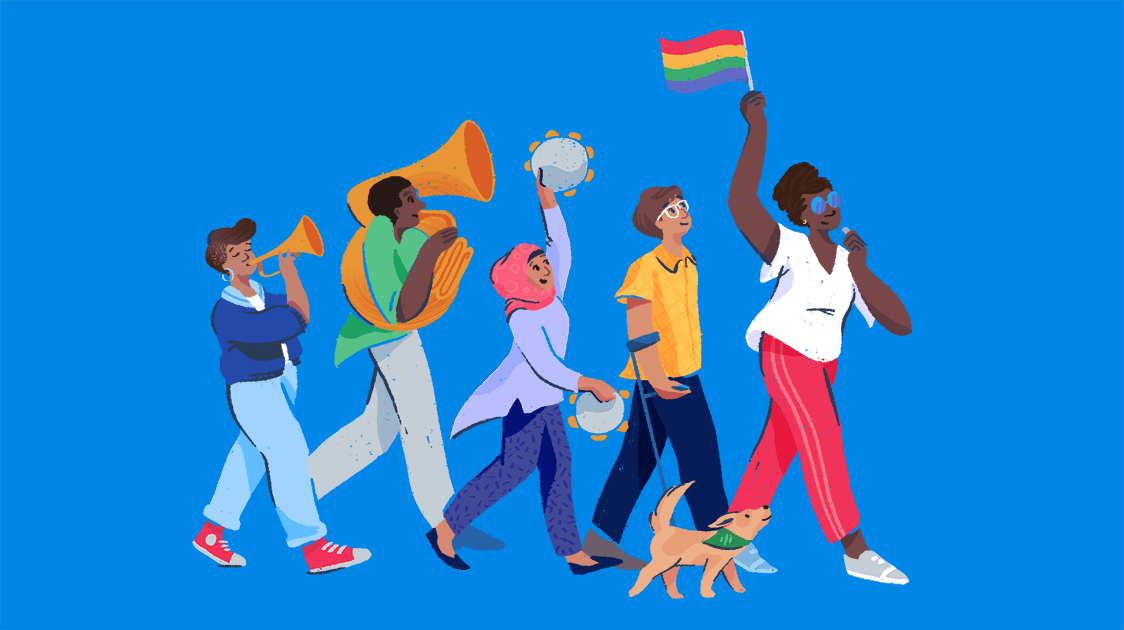
Hello everyone, and welcome to my blog, Knowledge into Kindness. My intention with this blog is to share some knowledge I’ve acquired while taking anthropology classes at university. I was learning all these new things about human societies and cultures and their development that was blowing my mind while also helping me finally make some sense of why certain things were happening in the world. I know some people are also trying to figure out why there is so much bigotry in societies, so I wanted to spread some knowledge and hopefully have that knowledge turn into kindness towards others.

 Knowledge into Kindness