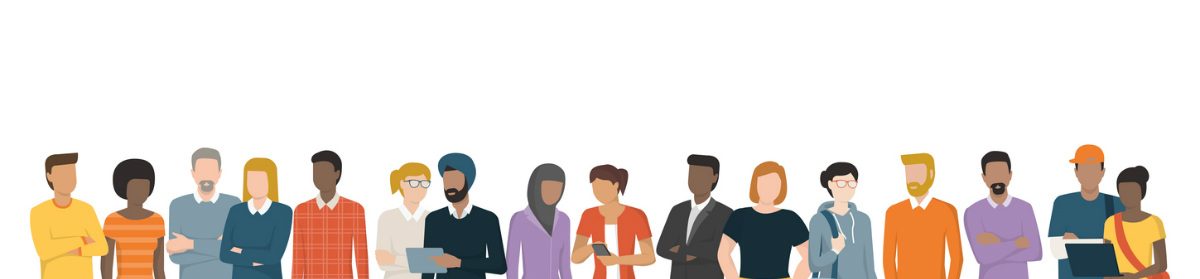
Hello and welcome again! This blog post is dedicated to the theory of intersectionality. The theory holds that “various forms of discrimination centered on race, gender, class, disability, sexuality, and other forms of identity, do not work independently but interact to produce particularized forms of social oppression” (“Intersectionality”, 2013). This theory basically declares that most people are frequently deprived by several sources of oppression such as: race, glass, gender, sexual orientation, religion etc. It identifies that overlapping identities (like “Hispanic” and “gay”) converge to make a complex oppression. The term was originally coined by law professor and social theorist, Kimberle Crenshaw. Though, the concept first emerged 2 decades earlier when black feminist spoke about how numerous black women were having difficulty identifying with issues of the mainstream white, middle-class nature of the feminist movement. Issues such as the stress to be a homemaker, were not concerns of black women as they did not have the comfort of being a homemaker as most often they had to work in order to keep their family alive and fed. Simultaneously, black women suffered sexism while partaking in the Civil Rights movement and were regularly kept away from positions of leadership. Thus, this intersectional encounter of racism in the feminist movement and sexism in the Civil Rights movement mobilized black women to command for a movement that focused on their lived experiences ( “What Is Intersectionality”, 2017). Intersectionality is essential to fighting the interconnected prejudices people battle every day and crucial to understanding the very broad range of disparities.
Why is intersectionality important?
Well without an intersectional lens, movements intended to help fight disparities for one group could end up offending or propagating systems of equalities towards other groups. It is vital that more people understand and acknowledge the different experiences people have who have overlapping identities. Through, this understanding people can be better equipped to help stop discrimination and disadvantages for others suffering from the complexity of converging oppressions.
How can you help?
Recognize difference. See that everyone has unique experiences with their identity.
Avoid oversimplified language. Move away from language that attempt to classify people by a singular identity.
Seek other points of view. Learn and ask about the narratives of the people with intertwined identities.
Show up. When you hear of problems others are facing, make a point to learn more about it and help them fight these discrepancies.
References
TED. (2016, December 7). The urgency of intersectionality | Kimberle Crenshaw [Video file]. Retrieved from https://www.youtube.com/watch?v=akOe5-UsQ2o
What is intersectionality, and what does it have to do with me? (2017, March 29). Retrieved from https://www.ywboston.org/2017/03/what-is-intersectionality-and-what-does-it-have-to-do-with-me/.
Intersectionality – Oxford Reference. (2013). Retrieved from https://www.oxfordreference.com/view/10.1093/acref/9780199599868.001.0001/acref-9780199599868-e-975.
 Knowledge into Kindness